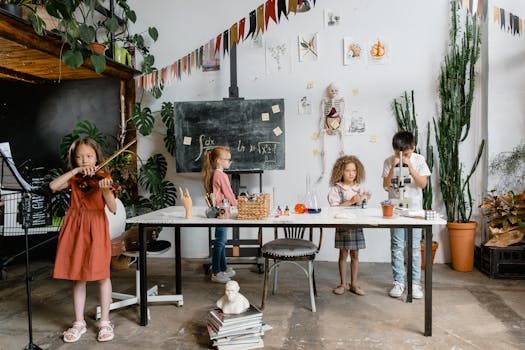

We often hear about the merits of “group work” in educational settings, but how often does it truly blossom into genuine collaboration? It’s a subtle but critical distinction. True collaboration isn’t just about assigning tasks and hoping for the best; it’s about orchestrating an environment where individuals actively contribute, constructively challenge, and collectively build understanding. This journey requires thoughtful design and a nuanced understanding of human interaction within a learning context. What, then, are the most effective approaches to promoting collaborative learning environments that move beyond superficial cooperation?
The Foundation: Designing for Interaction
Before we can even think about fostering collaboration, we need to lay the groundwork. This involves intentionally structuring activities and the learning space itself to encourage, rather than hinder, interaction. It’s about making collaboration the natural, even inevitable, outcome of the learning process.
#### Purposeful Task Design
Are the tasks you’re presenting truly conducive to collaboration, or are they easily solvable by individuals working in isolation?
Interdependence is Key: Design tasks that require input from multiple individuals to be completed successfully. This could involve jigsaw activities, where each student becomes an expert on a piece of information and teaches it to others, or problem-solving scenarios with interconnected variables that demand diverse perspectives.
Complexity Matters: Ambiguous or complex problems are fertile ground for collaborative exploration. When there isn’t a single, obvious answer, learners are more likely to engage in dialogue to explore possibilities and co-construct solutions.
Shared Goals, Varied Roles: While the ultimate goal is shared, assigning distinct roles can clarify expectations and ensure each learner feels a sense of ownership and responsibility for a specific contribution. This prevents the “social loafing” phenomenon where some individuals contribute less because they assume others will pick up the slack.
#### Structuring the Learning Space
Physical or virtual, the learning environment plays a significant role.
Flexible Arrangements: Move away from rigid rows. Arrange seating to facilitate easy conversation and interaction, whether in small clusters or U-shapes.
Accessible Resources: Ensure that materials, tools, and digital platforms are readily available and easily shared among collaborators. This removes logistical barriers to seamless teamwork.
Nurturing the Collaborative Spirit: Beyond Structure
Once the structure is in place, the real work begins: cultivating the attitudes and skills necessary for effective collaboration. This is where the “human” element truly comes into play. How do we encourage empathy, active listening, and constructive disagreement?
#### Explicitly Teaching Collaborative Skills
Many learners assume collaboration is intuitive, but critical skills like active listening, paraphrasing, and providing constructive feedback often need explicit instruction and practice.
Active Listening Workshops: Dedicate time to practicing skills like summarizing what others have said, asking clarifying questions, and maintaining eye contact (or its virtual equivalent).
Feedback Frameworks: Introduce structured ways to give and receive feedback, ensuring it’s specific, actionable, and delivered respectfully. Models like “I like, I wish, I wonder” can be incredibly effective.
Conflict Resolution Strategies: Disagreements are inevitable and, when managed well, can be highly productive. Equip learners with strategies for navigating differences of opinion constructively, focusing on the problem, not the person.
#### Fostering Psychological Safety
For learners to truly open up, share nascent ideas, and take intellectual risks, they must feel safe. This means creating an atmosphere where mistakes are seen as learning opportunities, not failures.
Encourage Vulnerability: Leaders and instructors can model this by admitting when they don’t know something or by sharing their own learning process, including challenges.
Zero Tolerance for Disrespect: Clearly establish and enforce norms against personal attacks or dismissive attitudes. Every voice deserves to be heard.
Celebrate Diverse Contributions: Acknowledge and value the myriad ways individuals can contribute to a group’s success, not just the loudest or most dominant voices.
Leveraging Technology for Deeper Connections
Technology can be a powerful enabler of collaboration, but it’s crucial to use it intentionally to enhance, rather than replace, meaningful human interaction.
#### Tools for Co-Creation and Communication
The right digital tools can amplify collaborative efforts.
Shared Document Platforms: Tools like Google Docs or Microsoft 365 allow multiple users to work on documents simultaneously, fostering real-time co-creation and visible contribution tracking.
Interactive Whiteboards and Brainstorming Tools: Platforms such as Miro or Mural offer visual spaces for groups to brainstorm, organize ideas, and map out concepts collectively, even from different locations.
Asynchronous Communication Channels: Discussion forums, Slack channels, or dedicated learning management system (LMS) features can facilitate ongoing dialogue outside of scheduled synchronous sessions, allowing for thoughtful reflection and contribution at one’s own pace.
#### Facilitating Meaningful Online Interaction
It’s easy for online discussions to become superficial. How can we encourage deeper engagement?
Prompting Deeper Inquiry: Design prompts that encourage learners to respond to each other’s ideas, not just the initial prompt. Ask them to build upon, challenge, or synthesize previous posts.
Moderation with Purpose: Facilitators play a key role in nudging conversations, asking probing questions, and summarizing key themes to help learners see the collective progress.
Assessing Collaborative Learning: More Than Just Group Grades
Evaluating collaborative work presents a unique challenge. How do we fairly assess individual contributions while acknowledging the collective outcome? This requires moving beyond a single group grade.
#### Balancing Individual and Group Accountability
A common pitfall is assigning one grade to the entire group, which can demotivate high achievers and absolve low achievers.
Peer Assessment: Implement structured peer assessment processes where students evaluate each other’s contributions based on agreed-upon criteria. This encourages critical reflection on one’s own participation and that of others.
Process Journals or Logs: Ask learners to maintain individual journals or logs documenting their contributions, challenges, learning, and reflections on the collaborative process. This provides valuable insight into individual engagement.
Component-Based Grading: Break down the collaborative project into smaller components, some of which can be graded individually (e.g., individual research, specific section of a report) and others collectively.
#### Focusing on the Learning Process
It’s not just about the final product; it’s about what learners learned through the process of collaborating.
Reflective Essays: Ask learners to reflect on what they learned about the subject matter and about collaboration itself through the activity.
* Observation and Facilitation Notes: For instructors, careful observation and notes on group dynamics and individual participation can inform assessment, especially in synchronous settings.
Wrapping Up: The Evolving Landscape of Collaborative Learning
Promoting collaborative learning environments is not a one-size-fits-all endeavor; it’s a dynamic process of design, facilitation, and continuous refinement. It demands that we move beyond simply assigning group tasks and instead focus on cultivating the conditions, skills, and mindset for true synergy. By thoughtfully structuring activities, nurturing essential interpersonal skills, strategically leveraging technology, and adapting our assessment methods, we can create learning spaces where individuals not only learn together but truly grow together. The approaches to promoting collaborative learning environments are as diverse as the learners themselves, and exploring these strategies is an ongoing, rewarding journey for any educator.